Perfume is the finishing touch to an outfit—it elevates our mood and completes the moment. But there are a few challenges we often overlook, simply because we’re too busy enjoying how good we smell. Fabrics react differently to fragrance, and what seems luxurious at first can turn into stains, lingering odors, or even unexpected skin irritation. In this blog, I’ll be sharing some of the key challenges that come with applying perfume to clothing. Feel free to leave a comment and let me know what challenges you have experienced!
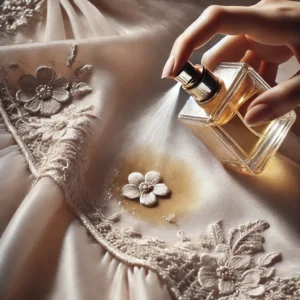
1. Staining
When perfume lands on fabric, it’s not always as innocent as it seems.
- Oil residues can leave marks that look yellowish or greasy, especially on light or delicate fabrics.
- Dark or colored perfumes may leave visible spots the moment they hit the fabric.
- Over time, perfume oils oxidize, causing slow-emerging stains that appear days—or even weeks—later.
- Fabrics like silk, satin, and wool are especially sensitive and can absorb the stain deeply, making it hard to remove.
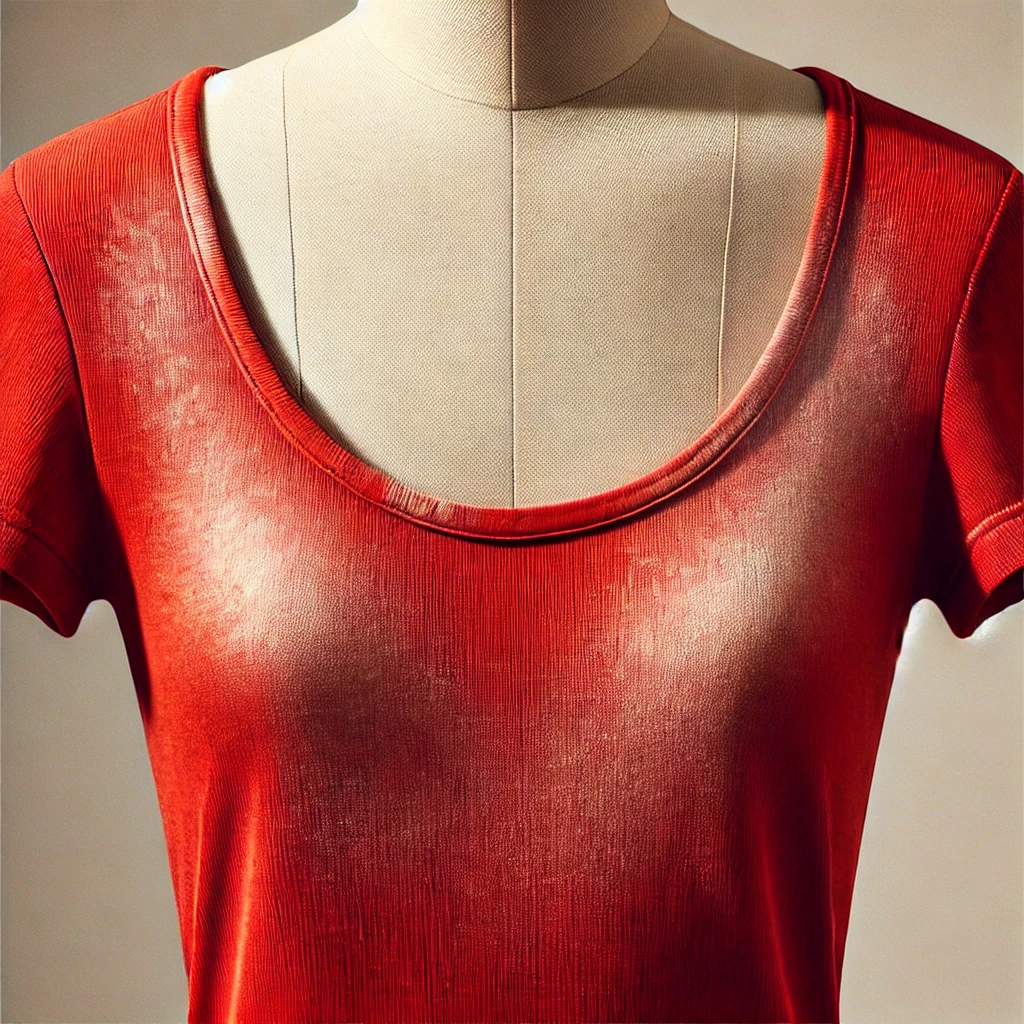
2. Fabric Damage
Perfume might smell luxurious, but the ingredients can be harsh on clothing fibers.
- The high alcohol content in many perfumes can dry out or weaken delicate fabrics.
- Some juices can act like a mild bleach, lightening or dulling the color of your favorite top.
- Repeated spraying can make the fabric feel stiff, brittle, or warped over time.
- Materials such as silk, cashmere, rayon, and acetate are more likely to react badly to perfumes.

3. The Scent Doesn’t Develop the Same
Perfume on fabric behaves very differently than perfume on skin.
- Perfume needs body heat to fully reveal its top, middle, and base notes—something clothes simply can’t provide.
- On fabric, scents tend to smell flatter or more linear, missing that warm, creamy dry-down.
- Floral and musky notes may smell sharper, while sweet notes may smell heavier than intended.
- You might not get the true personality of the fragrance when it’s trapped in the fibers instead of interacting with your skin.
4. The Scent Clings Too Long
A long-lasting scent sounds like a perk—until it isn’t.
- Fabric holds onto fragrance much longer than skin, often overpowering after a few hours.
- If you switch perfumes often, the scents can overlap and mix, creating an unintentional fragrance cocktail.
- Heavier notes (like oud, vanilla, patchouli, and amber) can cling so deeply that they survive multiple washes.
- In shared spaces—offices, classrooms, public transportation—a lingering perfume on clothes can feel overwhelming to people nearby.

5. Creates Skin Sensitivity
This challenge is less obvious, but surprisingly common.
- Perfume-soaked fabric sits directly against your skin, which can cause irritation or redness, especially for sensitive skin types.
- Certain fragrance ingredients can transfer from the cloth to your skin, leading to itching or allergic reactions.
- Tight-fitting clothes sprayed with perfume can trap the scent—and the chemicals—against your skin for hours.
- If you have eczema or dermatitis, perfume on fabrics can trigger flare-ups without you realizing the cause.
What are some challenges you experience while using a perfume!!!


Leave a Reply